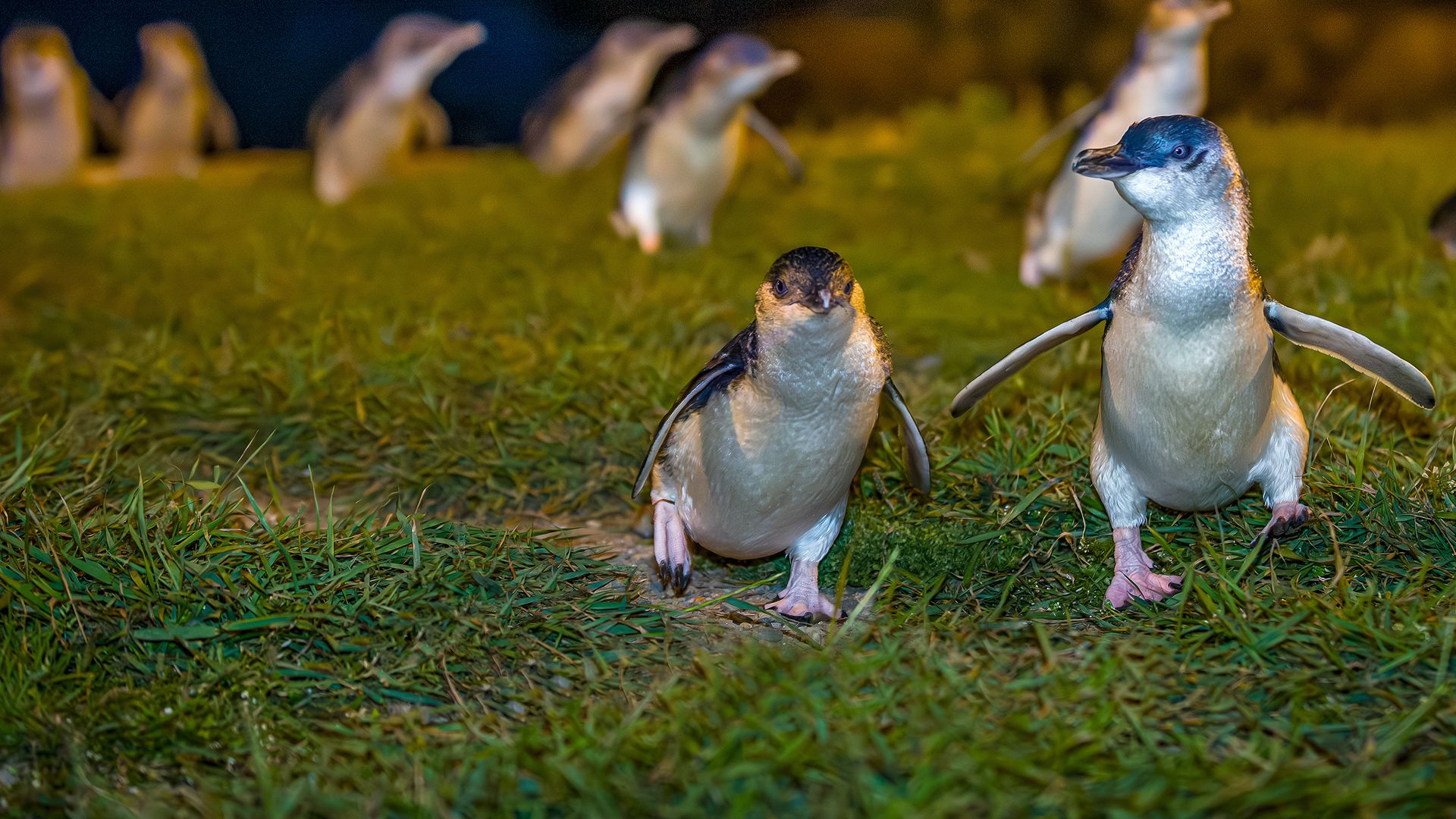
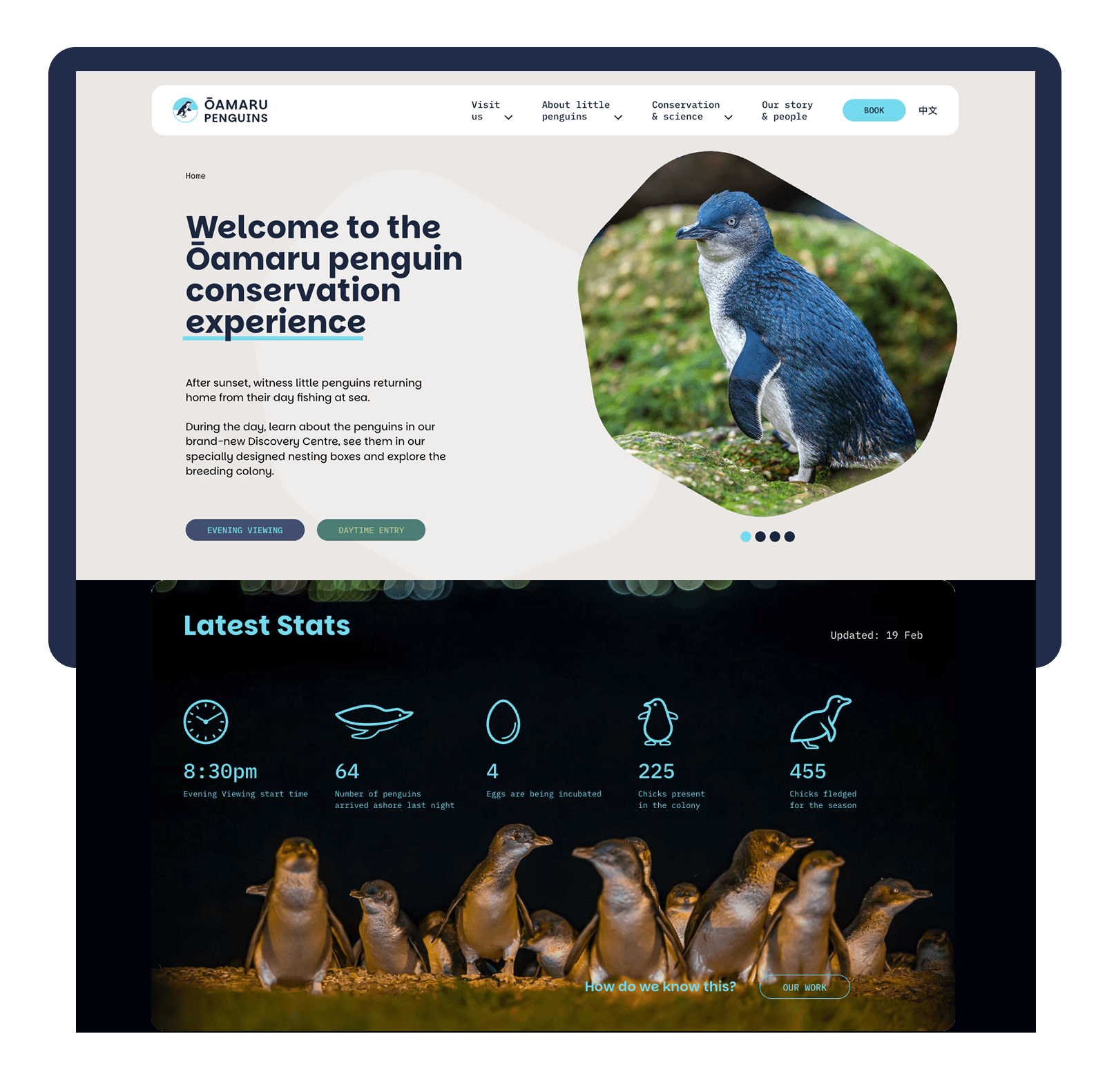
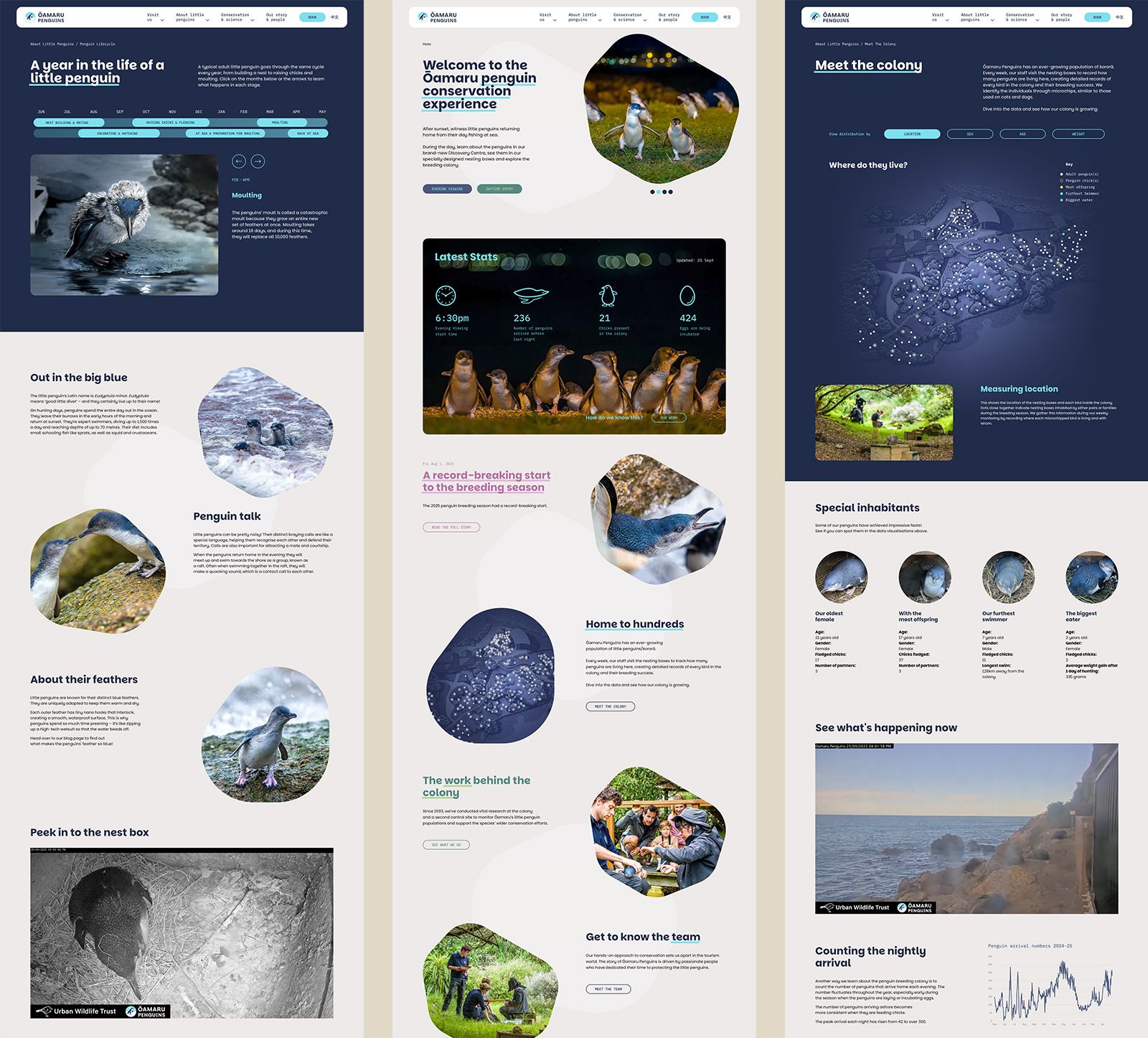
Dragonfly Data Science partnered with Ōamaru Penguins to develop a new website and transform decades of little penguin (kororā) monitoring into a modernised data management system. This data was brought to life as interactive tools that support conservation and engage visitors.
Each night in Ōamaru, hundreds of little penguins return from the sea to their burrows. Out of sight, their lives are carefully tracked: when they lay eggs, how many chicks hatch, how far they forage, and how they fare against storms or food shortages.
South Island tourism operator, Ōamaru Penguins has painstakingly carried out this monitoring by hand for nearly 30 years, quietly building one of the most detailed long-term datasets for kororā in the world, all while attracting thousands of visitors annually to visit the little penguins in their natural environment.
However, as the little penguin population declines, what once was a common species found throughout New Zealand has become ‘at risk’.
To better support the species, Ōamaru Penguins made it their mission to streamline their data management and conservation efforts to ensure that little penguins can thrive, as well as attracting more public awareness and interest in this work.
A collaborative effort
In September 2024, Ōamaru Penguins enlisted Dragonfly Data Science, Locales and Salted Herring Design to bring their science and conservation story to life, by combining brand storytelling with data visualisation.
Dragonfly’s part of the puzzle was twofold; both transforming the existing repository of little penguin data into actionable knowledge for the colony, and developing a new website that could better communicate this with the public.
By streamlining historical datasets and developing bespoke tools for ongoing monitoring, they revealed patterns in breeding and behaviour that support both research and public engagement - helping scientists, conservationists, and visitors alike better understand the kororā’s resilience, challenges, and successes.
This work involved developing a reporting app that pulls together years of monitoring, from flipper bands and microchips to GPS data and rehabilitation records, allowing scientists to quickly see long-term trends, compare breeding seasons, and share insights across the team.
“Conservation is only as good as the data behind it, so having the foresight to begin monitoring the Ōamaru little penguins back in 1993 provides this colony with a real advantage,” says Dr Finlay Thompson, Dragonfly’s Director of Data Science.
“However, more than that, this project shows how data science and storytelling can work hand in hand. It’s not just about managing information, it’s about making the invisible visible, and giving communities a reason to care about conservation.”
Armed with compelling data and a clear story to tell, Salted Herring Design led the charge in refreshing the brand - updating the logo, name and design guidelines. Striking the right balance between the scientific, educational, and tourism aspects of Ōamaru Penguins (previously Ōamaru Blue Penguin Colony) was challenging, but the result is a brand that speaks thoughtfully to each of these areas.
Rounding off the relaunch, visitor experience specialists, Locales, brought the brand and data visualisation to manuhiri passing through Ōamaru Penguins, through the creation of a new exhibition that includes interactive walls, touchscreens, and visualisations that draw directly from the reporting app. Between captivating illustrations and copy, this content was crucial to creating a seamless experience between online and offline channels.
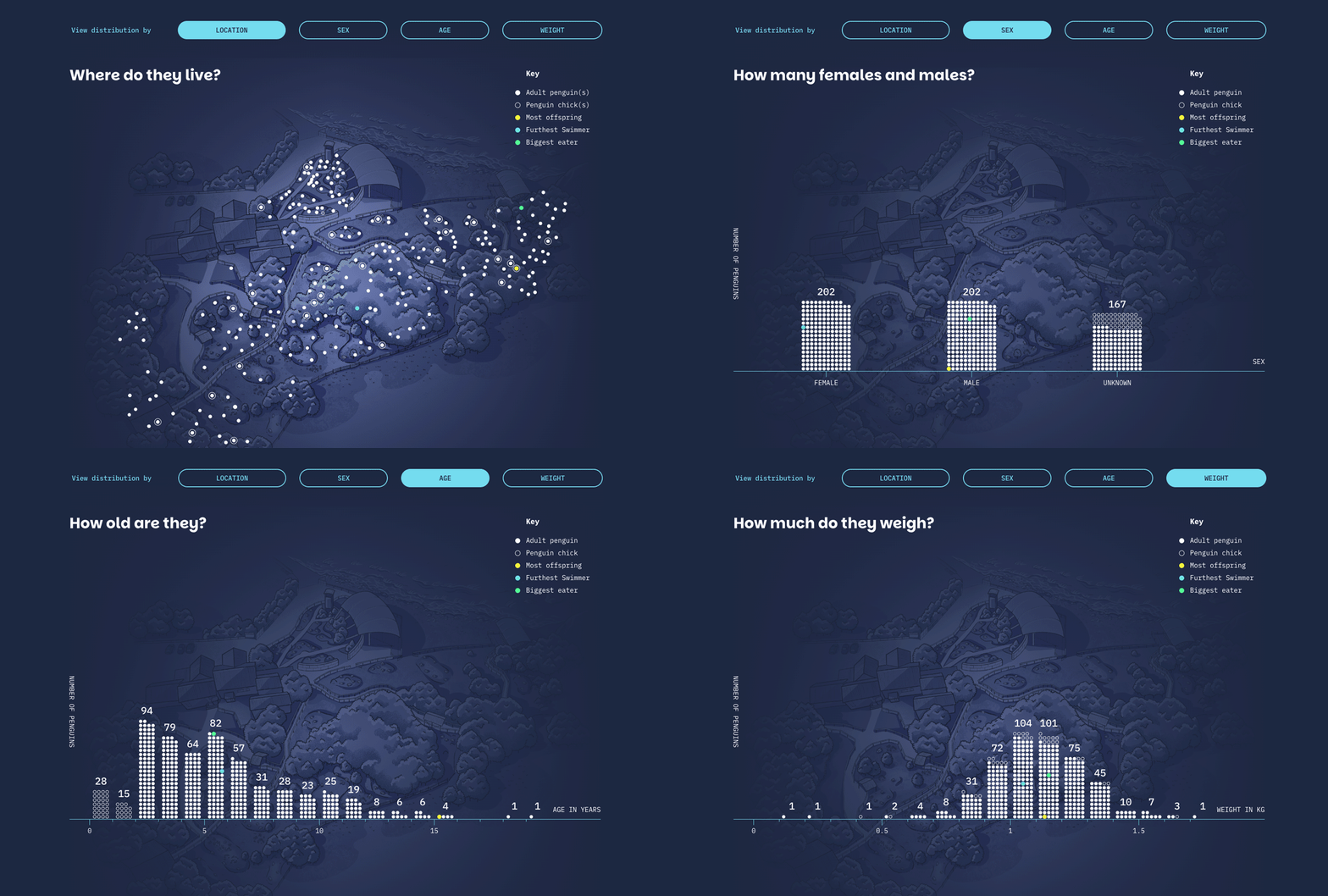
Visitors can ‘Meet the Colony’ through individual penguin profiles, view summaries of chick numbers over time, and see how breeding success has shifted with changing environmental conditions. With Dragonfly’s new data management systems powering the displays with live data, the story updates as soon as new information is logged at the colony.
A growing colony
Despite being ‘at risk’, the numbers tell a hopeful story. In the 1990s, the Ōamaru Penguins colony had fallen to fewer than 30 breeding pairs. Today, there are approximately 270 pairs. Despite rough weather this year, egg laying has already begun earlier than expected.
Decades of monitoring has revealed much about these slate-blue penguins. Loyal nesters that form lifelong pairs, they are skilled divers, reaching up to 35 metres for fish, squid, and krill. Their distinctive calls and nightly returns make the colony lively, although climate-driven changes mean they often travel further to find food - making robust monitoring vital to supporting their survival.
Encouragingly, stable and growing populations have been reported in some New Zealand colonies, including Ōamaru Penguins, where there is not only predator control in place, but also active penguin rehabilitation work, monitoring and habitat maintenance.
Project team:
Read The Press media coverage: ‘Fresh face and a wider lens’: Ōamaru’s blue penguin colony rebrands.
Philippa AgnewMonitoring data has been collected at two colonies of little penguins in Ōamaru for over 30 years. It is a complex dataset and managing the enormity of it has been a bit of a challenge in recent years!
Working with Dragonfly has changed that for us, with a streamlined data entry system and a reporting app, enabling the Ōamaru Penguins team to interact with the data more efficiently. They also created data visualisations for us to share with our customers on our website and in our newly refitted Discovery Centre. Here, customers can see the most recent penguin stats resulting from the monitoring work.
The Dragonfly team’s attention to detail, responsiveness, and commitment to understanding our needs have made this an enjoyable and very successful project. Working with Dragonfly means more than accessing great technology, it means working alongside people who are genuinely invested in the success of our conservation goals and research work.
We’re grateful for their expertise and are excited to continue working together.
Science & Environmental Manager,
Ōamaru Penguins